
Brugada Syndrome
Beyond Diagnosis: Active Protection
Risk stratification and cutting-edge therapies are provided by Dr. Stefano Grossi, an international reference point and the second-largest case history in the world for robotic ablation.
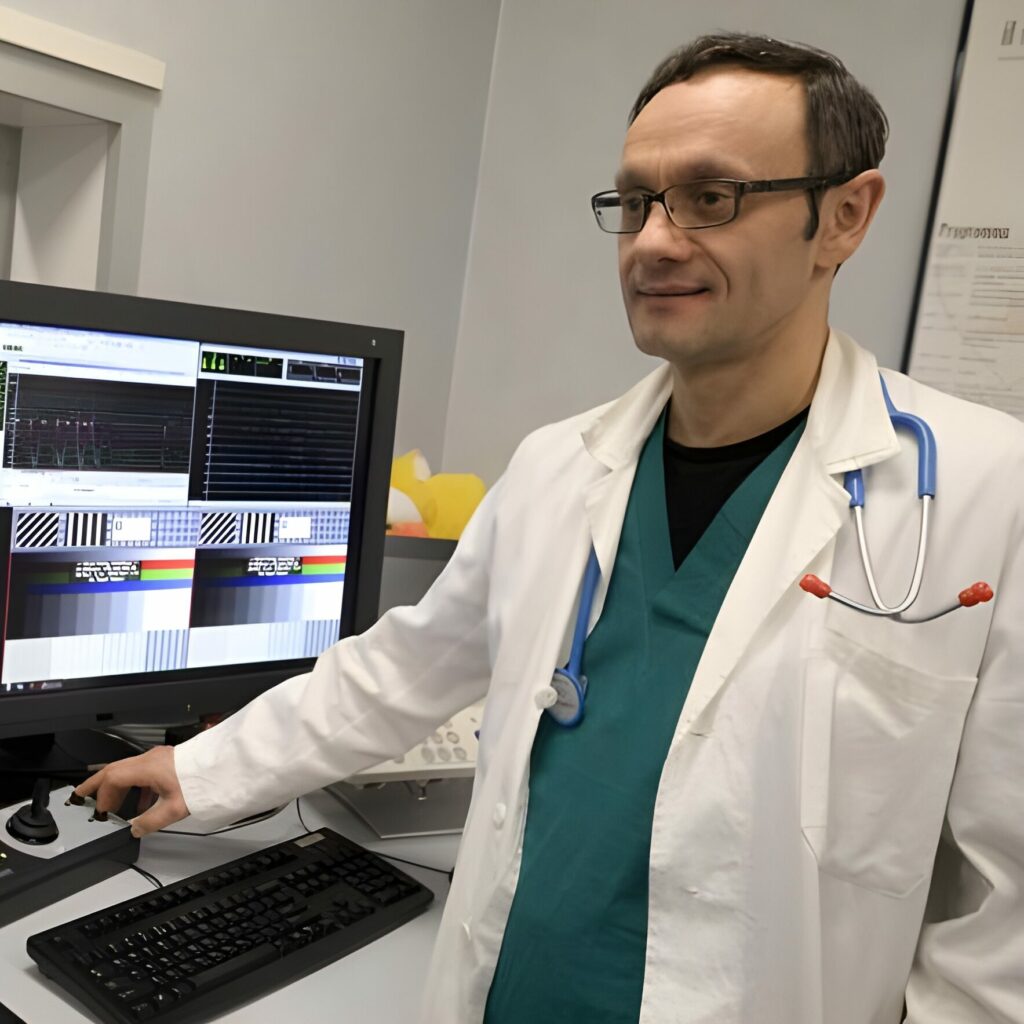
DR. STEFANO GROSSI
World-class experience.
With over 200 ablation procedures performed, Dr. Grossi is a pioneer in the interventional treatment of Brugada Syndrome.
.
2nd largest case history in the world
for ablation procedures.
1st Stereotaxis robotic ablation
Performed in 2018.
The Personalized Approach
Therapy is not universal but is "tailored" to the clinical profile of the individual patient through four levels of intervention.

1. Low Risk
Focus on prevention and lifestyle.
- fever management (>37.5°C)
- brugadadrugs.org database
- avoiding excesses in alcohol and food

2. High Risk
Immediate protection is provided with an ICD.
- (Defibrillator: traditional, subcutaneous, or extravascular)
- electrical "guardian angel"
- Ablation of the Right Infundibular Epicardial Substrate

3. Intermediate Risk
Targeted pharmacological therapy.
- Traditional treatment with quinidine is noted to be poorly tolerated by some
- Ablation of the Right Infundibular Epicardial Substrate

4. The Turning Point
Epicardial Ablation
- Ablation of the Right Infundibular Epicardial Substrate
- A definitive therapy that intervenes by removing the diseased arrhythmic area
- Stereotaxis navigation
- millimeter precision
Note:
Despite its high efficacy, approximately 30% of patients must discontinue traditional pharmacological treatment due to intolerance.
Documented Clinical Results
The effectiveness of ablation based on solid data.
96%
Rate of disappearance of the Type 1 Pattern
(the ECG sign of the disease) and a significant reduction in arrhythmic risk.
<2%
Extremely low
complication rate.
Towards a Doctor-Patient Alliance
Today, ablation allows for the reduction of the risk of adverse events without depending on lifelong medications or internal prosthetics. Every case is unique.
If you wish to evaluate whether your situation allows for a definitive treatment, you can
What Are the Treatments for Brugada Syndrome?
The most advanced treatments for Brugada Syndrome, from defibrillator implantation to epicardial ablation.

